How to Play This Icebreaker Game
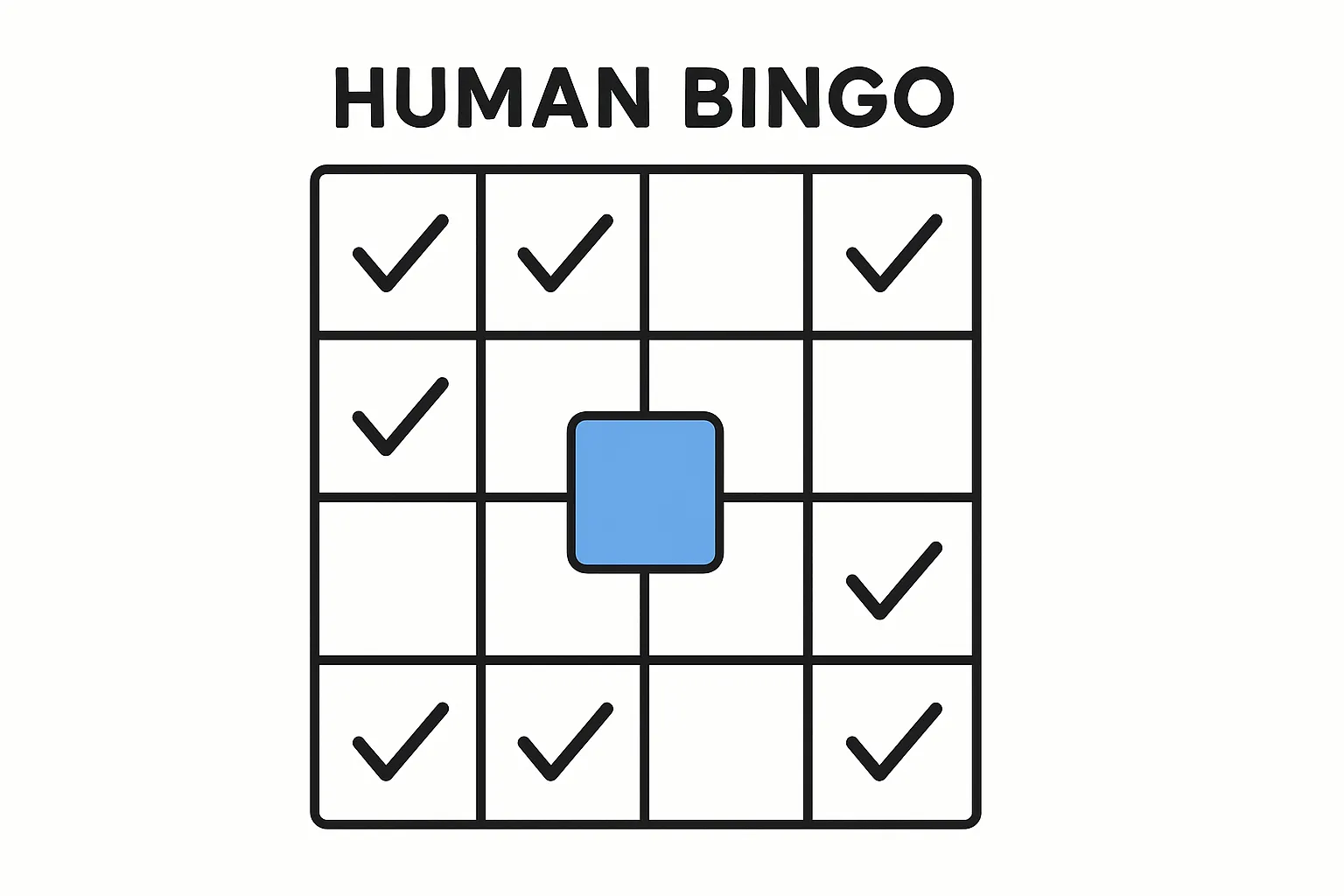
- 1Create bingo cards with different characteristics or experiences in each square (e.g., 'Has traveled to Asia', 'Speaks more than two languages', 'Is left-handed'). You can use our free generator to make this easy.
- 2Distribute the cards and pens to all participants. Explain the rules: You must find a different person for each square (if possible), and you cannot sign your own card.
- 3Start the timer! Players mingle and find people who match the descriptions in the squares, getting their signature.
- 4The first person to get a 'Bingo' (a full row, column, or diagonal) shouts it out! Verify their card and award a prize.
Materials Needed
- Pre-made bingo cards
- Pens
Variations
Virtual Bingo: Convert squares into a shared doc/whiteboard. Participants add initials next to matches and share one fun fact aloud.
Theme-Based Cards: Tailor prompts to onboarding, product knowledge, or company values to make mingling mission-aligned.
Low-Movement Option: Let participants rotate in small circles or stay seated while others visit, to support accessibility.
Facilitator Guide
Opening Script:
Grab a bingo card and a pen. Your goal is to meet people and find someone who matches each square. When you do, ask their name and get their signature. First to complete a line shouts 'Bingo!'
Closing Script:
Nice work! Beyond the winners, look at how many new names and stories you picked up. That’s the real prize—new connections you can build on today.
Why This Works
Why this icebreaker game works: This structured mingle lowers social friction by giving everyone a clear purpose and conversation openers. The constraints (a card and a deadline) create momentum while ensuring interactions spread beyond usual circles.
Best For
Ideal icebreaker situations for this game include:
- Conferences and company offsites
- New teams or cross-functional mixers
- Large groups where networking is a goal
Important Notes
- Keep prompts inclusive and work-appropriate; avoid sensitive topics (religion, politics, income).
- For very large groups, timebox to 5–8 minutes or use multiple winners to maintain energy.
- Ensure accessibility: offer alternatives for those who prefer minimal movement.
Ideas & Prompts
Work & Office
Has been at the company for 5+ years
Works in a different department
Has a messy desk
Prefers tea over coffee
Walks or bikes to work
Remote Work & Tech
Has a standing desk
Is wearing pajama bottoms
Has 0 unread emails
Uses a mechanical keyboard
Has a dual monitor setup
Travel & Adventure
Has visited 3+ continents
Has climbed a mountain
Has lived in another country
Speaks 2+ languages
Has never been on a plane
Fun & Personal
Is left-handed
Plays a musical instrument
Has a pet dog
Can juggle
Has never broken a bone
Food & Drink
Loves spicy food
Is a vegetarian
Can bake a cake from scratch
Dislikes chocolate
Drinks black coffee
Hobbies & Skills
Can play chess
Loves gardening
Can knit
Loves fishing
Can do magic tricks
Entertainment & Culture
Watched all Harry Potter movies
Been to a music festival
Loves horror movies
Can rap a whole song
Loves museums
Lifestyle Habits
Is an early bird
Doesn't drink coffee
No social media accounts
Keeps a journal
Loves cold showers
Unique Experiences
Been on TV or in a newspaper
Won a trophy
Met a celebrity
Has a twin
Had long hair (or bald)
Student Days
Was class monitor
Was on a school team
Never late for class
Loved math
Performed at school festival
Game FAQ
What are the rules for Human Bingo?
1) Find a person matching the square description. 2) Ask them to sign it. 3) You cannot sign your own card. 4) Each person can only sign once per card. 5) First to get 5 in a row wins.
What are the rules for Human Bingo?
1) Find a person matching the square description. 2) Ask them to sign it. 3) You cannot sign your own card. 4) Each person can only sign once per card. 5) First to get 5 in a row wins.
How many squares should a bingo card have?
For 5–8 minutes, use 16–20 squares; for 10–12 minutes, 24–25 squares. Ensure at least 2–3 easy wins per row.
How many squares should a bingo card have?
For 5–8 minutes, use 16–20 squares; for 10–12 minutes, 24–25 squares. Ensure at least 2–3 easy wins per row.
Can I play Human Bingo virtually?
Yes! Use breakout rooms. Participants can type names into a digital card instead of getting signatures.
Can I play Human Bingo virtually?
Yes! Use breakout rooms. Participants can type names into a digital card instead of getting signatures.
Where can I make printable Human Bingo cards?
Use the Human Bingo card generator linked on this page to create printable or virtual cards, customize the squares, and reuse the same prompts for work, school, or event groups.
Where can I make printable Human Bingo cards?
Use the Human Bingo card generator linked on this page to create printable or virtual cards, customize the squares, and reuse the same prompts for work, school, or event groups.
What if the room is too quiet?
Play music quietly in the background and call out mini-challenges (e.g., 'Find someone who's traveled to 3+ countries').
What if the room is too quiet?
Play music quietly in the background and call out mini-challenges (e.g., 'Find someone who's traveled to 3+ countries').
What are good prizes?
Simple fun items work best: coffee gift cards, company swag, or just bragging rights.
What are good prizes?
Simple fun items work best: coffee gift cards, company swag, or just bragging rights.