Icebreaker Games LogoIcebreaker Games

5-Minute Icebreakers: Fast, Fun, Zero-Prep

These short icebreakers take 5 minutes or less and work great for hybrid and in-person meetings.

Most icebreakers run long. This list stays under five minutes so you can warm up the room without derailing the agenda.

Perfect for Zoom, hybrid, or in-room meetings—grab a timer, explain in 20 seconds, and move on with momentum.

5-Minute Speed Icebreakers

Emoji Story

#1Emoji Story

Tell stories or guess phrases using only emojis. Includes collaborative storytelling and 'Emoji Charades' modes. Perfect for remote teams to spark creativity and break communication barriers.

3+ Players5 minVirtual

Steps

  1. 1.Mode 1: Storytelling. One person starts with a theme or an opening emoji.
  2. 2.Each person takes a turn adding ONE emoji to continue the plot.
  3. 3.Continue until the story reaches a conclusion, then try to narrate it back in words.
  4. 4.Mode 2: Emoji Charades. One person picks a prompt (Movie, Song, etc.) and types it out using ONLY emojis.

Quick Questions

#2Quick Questions

Quick Questions is a rapid-fire icebreaker for meetings. Participants answer short, fun questions to break the silence. Great for virtual and in-person teams.

3+ Players5 minHybrid

Steps

  1. 1.Prepare a list of simple, fun questions (e.g., 'What's your favorite pizza topping?', 'What was the first concert you attended?').
  2. 2.Go around the room and have each person answer a different question as quickly as possible.
  3. 3.Keep it moving to maintain a high-energy and spontaneous atmosphere.
Materials:Pre-prepared list of 10–15 quick questions
Roll the Dice Confessions

#3Roll the Dice Confessions

Roll a die and answer a prompt tied to the number—adds randomness and laughs to sharing.

3+ Players5 minHybrid

Steps

  1. 1.Prepare six light prompts (1–6).
  2. 2.A player rolls and answers the matching prompt in 20–30 seconds.
  3. 3.Play multiple rounds with new prompts if time allows.

10-Minute Short Icebreakers

20 Questions

#120 Questions

20 Questions is a classic deductive reasoning icebreaker suitable for teams of any size. One player thinks of a secret person, place, or object, and others guess it by asking up to 20 "Yes" or "No" questions. This game requires no props, can be played anywhere, and effectively sharpens logical thinking, communication skills, and collaborative problem-solving.

3+ Players10 minHybrid

Steps

  1. 1.The host (or a volunteer) thinks of a specific person, place, object, or concept.
  2. 2.Others take turns asking questions to narrow down the possibilities. The host can only answer "Yes," "No," "Maybe," or "Partially."
  3. 3.Guessers can attempt to solve the riddle at any time.
  4. 4.The group has a total of 20 questions (guesses count as a question).
Birthday Line-Up

#2Birthday Line-Up

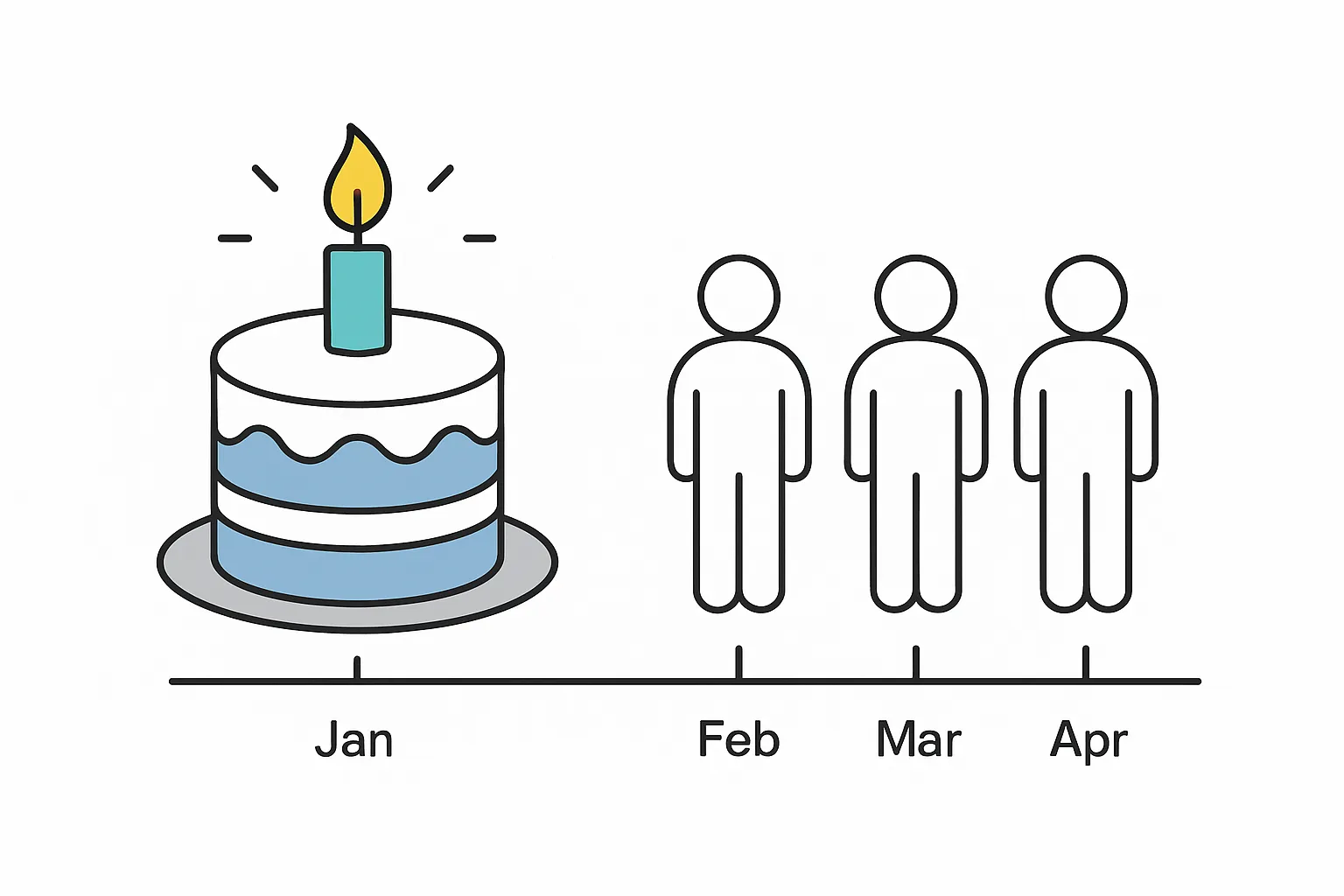
A classic non-verbal challenge where the group lines up by birthday without speaking. Excellent for improving communication and problem-solving skills.

8+ Players10 minIn-Person

Steps

  1. 1.Instruct the group to arrange themselves in a line according to their birthday, from January 1st to December 31st.
  2. 2.The catch: they cannot speak or write anything down.
  3. 3.Participants must use gestures, like holding up fingers for the month and day, to figure out the correct order.
  4. 4.Once done, go down the line and have everyone say their birthday to see if they succeeded.
Charades

#3Charades

Need charades words? Get 150+ funny, hard, and easy acting prompts for adults & kids. Includes a free "Generator" to pick words for you. Play now!

4+ Players10 minIn-Person

Steps

  1. 1.Split into two teams (or play all together).
  2. 2.One player draws a prompt (movie, action, object, etc.) and acts it out without speaking or spelling.
  3. 3.Teammates guess within the time limit (usually 60–90 seconds).
  4. 4.Rotate players so everyone gets a turn. Keep score if playing in teams.
Common Ground Challenge

#4Common Ground Challenge

Small groups race to find a set number of uncommon things they all share in common.

6+ Players10 minHybrid

Steps

  1. 1.Form groups of 3–5 and set a target (e.g., 5 commonalities).
  2. 2.Give 5–8 minutes to discover overlaps beyond the obvious.
  3. 3.Share highlights with the whole group.
Desert Island

#5Desert Island

Participants share the three essential items they'd bring to a deserted island.

3+ Players10 minHybrid

Steps

  1. 1.Ask the group: 'If you were stranded on a desert island, what three items would you bring and why?'
  2. 2.Go around the circle and have each person share their three items.
  3. 3.Encourage follow-up questions to understand the reasoning behind their choices.
Doodle Duel Derby

#6Doodle Duel Derby

A fast-paced collaborative drawing game. Rotate sketches, build on others' work, and guess contributors. Perfect for creative warm-ups and team building.

4+ Players10 minHybrid

Steps

  1. 1.Everyone starts a doodle; after 30–60 seconds, rotate canvases.
  2. 2.Repeat 3–5 rotations, then reveal and guess contributors.
  3. 3.Vote for the funniest or most artistic piece.
Draw Your Neighbor

#7Draw Your Neighbor

A complete guide to the hilarious 'Draw Your Neighbor' challenge. Includes facilitator scripts, rules for 'blind drawing', and variations like 'Gallery Walk'. Perfect for energizing remote teams.

4+ Players10 minVirtual

Steps

  1. 1.On a video call, have everyone pin the video of the person to their right.
  2. 2.Without looking down at their paper/drawing tool, everyone tries to draw a portrait of that person in 60 seconds.
  3. 3.At the end, everyone holds up their masterpiece for a good laugh.
Materials:Paper and marker, or a digital drawing tool
Firsts

#8Firsts

Share memorable ‘firsts’ (first concert, job, trip) in quick rounds to learn fun personal history.

3+ Players10 minHybrid

Steps

  1. 1.Prepare a short list of ‘firsts’ prompts.
  2. 2.Go around quickly; each person answers one prompt.
  3. 3.Do 2–3 rounds depending on time.
Materials:List of "firsts" prompts (concert, job, trip, car, etc.)
Fridge Art Throwbacks

#9Fridge Art Throwbacks

Share a childhood artwork or recreate one! A nostalgic activity to share personal stories and build emotional connections.

3+ Players10 minHybrid

Steps

  1. 1.Ask participants to bring an old drawing or make a quick kid-style doodle.
  2. 2.Each person shares for 30–60 seconds.
  3. 3.Invite light questions and appreciation.
Materials:Childhood artwork (physical or photo), Optional: Paper and crayons for recreation
Geographical Guess

#10Geographical Guess

A deduction game that tests logic and geography. Pick a place you've visited, and let others find you using only 'Yes/No' questions. From hemispheres to local cuisine, travel the world through deduction.

3+ Players10 minHybrid

Steps

  1. 1.Each participant secretly chooses a real place they have visited (city, country, or landmark).
  2. 2.Others take turns asking 'Yes/No' questions (e.g., 'Is it in the Northern Hemisphere?' 'Is it a coastal city?').
  3. 3.The goal is to pinpoint the location within 10-15 questions. If guessed correctly, the winner becomes the next 'traveler'.

Virtual-Friendly Options

Emoji Story

#1Emoji Story

Tell stories or guess phrases using only emojis. Includes collaborative storytelling and 'Emoji Charades' modes. Perfect for remote teams to spark creativity and break communication barriers.

3+ Players5 minVirtual

Steps

  1. 1.Mode 1: Storytelling. One person starts with a theme or an opening emoji.
  2. 2.Each person takes a turn adding ONE emoji to continue the plot.
  3. 3.Continue until the story reaches a conclusion, then try to narrate it back in words.
  4. 4.Mode 2: Emoji Charades. One person picks a prompt (Movie, Song, etc.) and types it out using ONLY emojis.
Quick Questions

#2Quick Questions

Quick Questions is a rapid-fire icebreaker for meetings. Participants answer short, fun questions to break the silence. Great for virtual and in-person teams.

3+ Players5 minHybrid

Steps

  1. 1.Prepare a list of simple, fun questions (e.g., 'What's your favorite pizza topping?', 'What was the first concert you attended?').
  2. 2.Go around the room and have each person answer a different question as quickly as possible.
  3. 3.Keep it moving to maintain a high-energy and spontaneous atmosphere.
Materials:Pre-prepared list of 10–15 quick questions
Roll the Dice Confessions

#3Roll the Dice Confessions

Roll a die and answer a prompt tied to the number—adds randomness and laughs to sharing.

3+ Players5 minHybrid

Steps

  1. 1.Prepare six light prompts (1–6).
  2. 2.A player rolls and answers the matching prompt in 20–30 seconds.
  3. 3.Play multiple rounds with new prompts if time allows.
20 Questions

#420 Questions

20 Questions is a classic deductive reasoning icebreaker suitable for teams of any size. One player thinks of a secret person, place, or object, and others guess it by asking up to 20 "Yes" or "No" questions. This game requires no props, can be played anywhere, and effectively sharpens logical thinking, communication skills, and collaborative problem-solving.

3+ Players10 minHybrid

Steps

  1. 1.The host (or a volunteer) thinks of a specific person, place, object, or concept.
  2. 2.Others take turns asking questions to narrow down the possibilities. The host can only answer "Yes," "No," "Maybe," or "Partially."
  3. 3.Guessers can attempt to solve the riddle at any time.
  4. 4.The group has a total of 20 questions (guesses count as a question).
Common Ground Challenge

#5Common Ground Challenge

Small groups race to find a set number of uncommon things they all share in common.

6+ Players10 minHybrid

Steps

  1. 1.Form groups of 3–5 and set a target (e.g., 5 commonalities).
  2. 2.Give 5–8 minutes to discover overlaps beyond the obvious.
  3. 3.Share highlights with the whole group.
Desert Island

#6Desert Island

Participants share the three essential items they'd bring to a deserted island.

3+ Players10 minHybrid

Steps

  1. 1.Ask the group: 'If you were stranded on a desert island, what three items would you bring and why?'
  2. 2.Go around the circle and have each person share their three items.
  3. 3.Encourage follow-up questions to understand the reasoning behind their choices.
Doodle Duel Derby

#7Doodle Duel Derby

A fast-paced collaborative drawing game. Rotate sketches, build on others' work, and guess contributors. Perfect for creative warm-ups and team building.

4+ Players10 minHybrid

Steps

  1. 1.Everyone starts a doodle; after 30–60 seconds, rotate canvases.
  2. 2.Repeat 3–5 rotations, then reveal and guess contributors.
  3. 3.Vote for the funniest or most artistic piece.
Draw Your Neighbor

#8Draw Your Neighbor

A complete guide to the hilarious 'Draw Your Neighbor' challenge. Includes facilitator scripts, rules for 'blind drawing', and variations like 'Gallery Walk'. Perfect for energizing remote teams.

4+ Players10 minVirtual

Steps

  1. 1.On a video call, have everyone pin the video of the person to their right.
  2. 2.Without looking down at their paper/drawing tool, everyone tries to draw a portrait of that person in 60 seconds.
  3. 3.At the end, everyone holds up their masterpiece for a good laugh.
Materials:Paper and marker, or a digital drawing tool
Firsts

#9Firsts

Share memorable ‘firsts’ (first concert, job, trip) in quick rounds to learn fun personal history.

3+ Players10 minHybrid

Steps

  1. 1.Prepare a short list of ‘firsts’ prompts.
  2. 2.Go around quickly; each person answers one prompt.
  3. 3.Do 2–3 rounds depending on time.
Materials:List of "firsts" prompts (concert, job, trip, car, etc.)
Fridge Art Throwbacks

#10Fridge Art Throwbacks

Share a childhood artwork or recreate one! A nostalgic activity to share personal stories and build emotional connections.

3+ Players10 minHybrid

Steps

  1. 1.Ask participants to bring an old drawing or make a quick kid-style doodle.
  2. 2.Each person shares for 30–60 seconds.
  3. 3.Invite light questions and appreciation.
Materials:Childhood artwork (physical or photo), Optional: Paper and crayons for recreation

Facilitation Tips

  • Timebox strictly and prepare a timer; keep instructions to under 20 seconds.
  • Pick zero-material options when possible; avoid screen-sharing if it slows setup.
  • Have 2 backup ideas in case participation is low or time shifts.

FAQs

Can 5-minute icebreakers actually make a difference?

Absolutely! Quick icebreakers are highly effective because they lower social friction, increase engagement, and don't derail your agenda. Even 5 minutes of connection at the start of meetings improves participation and team cohesion. These fast icebreakers work especially well for busy schedules, daily standups, and back-to-back meetings.

What are the best quick icebreaker games for meetings?

The best quick icebreakers take 5 minutes or less and require zero prep. Top picks: Quick Questions (lightning-fast responses), 'This or That' (binary choices), Rose/Bud/Thorn (reflection), and One-Word Check-In. For virtual meetings, chat-based or poll-style quick icebreakers work perfectly on Zoom or Teams.

What if I only have 2-3 minutes for an icebreaker?

For 2-3 minute icebreakers, use single-prompt formats: 'One-Word Check-In' (go around quickly), 'This or That' question (raise hands or chat), or 'What emoji describes your week?' These ultra-quick icebreakers energize without eating up time. Set a strict timer and demonstrate first.

Do quick icebreaker games work for large teams?

Yes, but adapt the format! For large teams, use simultaneous participation methods: chat responses everyone posts at once, polls with instant results, or breakout rooms of 4-5 people for Quick Questions rounds. Avoid games where 20+ people take turns speaking—those aren't truly 5-minute icebreakers.

How do I keep 5-minute icebreakers inclusive for different personalities?

Make quick icebreakers accessible by offering pass options, varying formats (verbal responses, chat, emoji reactions, polls), and starting with low-pressure options. Introverts often prefer 'This or That' or chat-based responses over speaking first. Never force participation—voluntary engagement creates better energy in fast team building activities.